









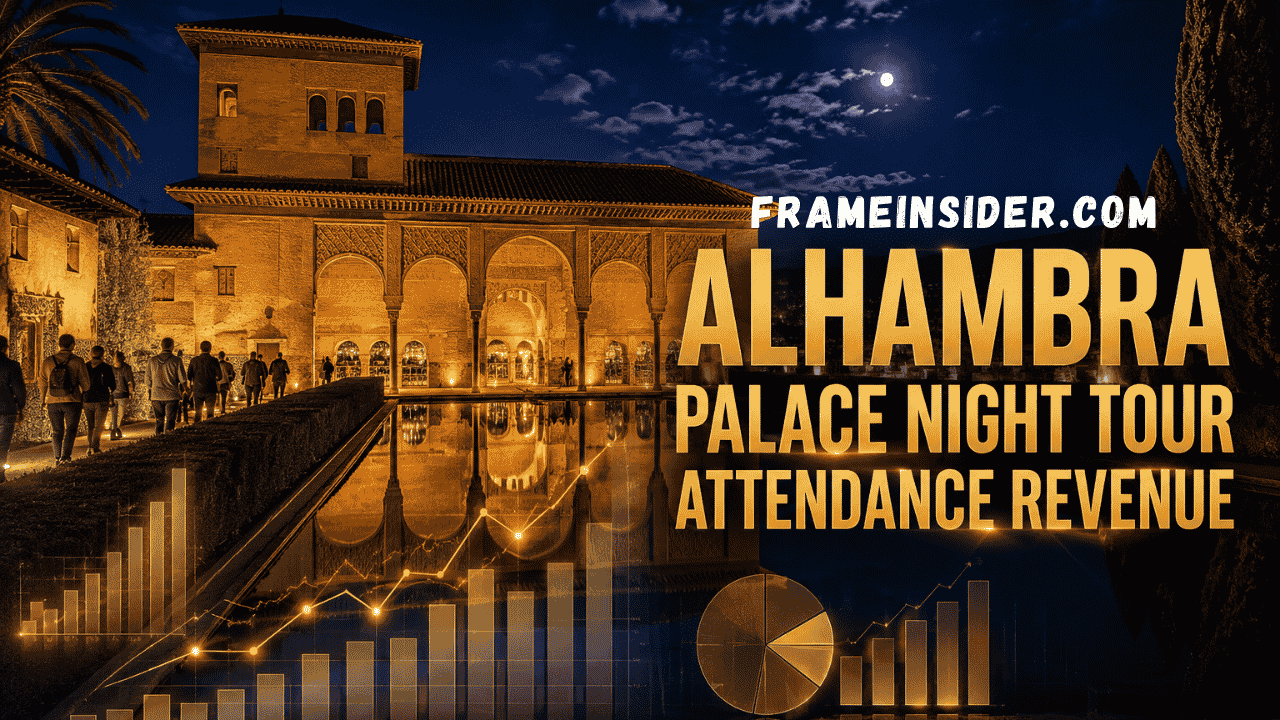
The Alhambra stands among the most famous historical landmarks in Spain, attracting millions of visitors every year. While daytime visits remain the most popular option, night tours have become an increasingly sought-after experience for travelers who want to see the monument in a different atmosphere. Interest in alhambra palace night tour attendance revenue has grown as tourism professionals, travel enthusiasts, and researchers seek to understand the financial contribution of these exclusive evening visits.
The topic of alhambra palace night tour attendance revenue extends beyond ticket sales alone. It reflects visitor demand, tourism management strategies, conservation efforts, and the broader economic impact on Granada. As visitor numbers continue to reach record levels, night tours have emerged as a valuable component of the Alhambra’s overall tourism model.
Understanding the Popularity of Alhambra Night Tours
The Alhambra’s night tours offer visitors a unique opportunity to explore sections of the monument under carefully designed lighting conditions. The experience differs significantly from daytime visits, creating a quieter and more intimate atmosphere. Many travelers consider the evening visit one of the most memorable ways to appreciate the beauty of the Nasrid Palaces and surrounding architecture.
The growing interest in alhambra palace night tour attendance revenue is closely tied to the increasing popularity of these special tours. Visitors often seek alternatives to crowded daytime schedules, making evening access an attractive option. The exclusivity of limited nightly admissions also increases demand throughout much of the year.
Unlike standard daytime entry, night tours operate with stricter attendance limits. This approach helps preserve the historical site while maintaining a premium visitor experience. As a result, demand frequently exceeds available capacity during peak tourism seasons.
Annual Attendance at the Alhambra
The Alhambra continues to rank among the most visited cultural attractions in Europe. Recent visitor statistics indicate that annual attendance has reached approximately 2.7 million visitors. These figures highlight the monument’s importance within Spain’s tourism industry and its role as a major attraction in Andalusia.
When discussing alhambra palace night tour attendance revenue, it is important to understand how night tours fit within the broader visitor landscape. Evening visitors represent only a small percentage of total attendance, but their contribution remains significant due to the premium nature of the experience. Even a relatively small share of visitors can generate substantial revenue when ticket pricing and demand are considered.
Visitor growth has remained strong despite capacity controls. The management authority carefully balances tourism demand with preservation objectives. This strategy ensures that future generations can continue to enjoy the monument without excessive wear and damage.
Estimated Night Tour Attendance
Although official reports rarely separate night-tour attendance from overall visitor numbers, industry estimates provide useful insight. Tourism analysts commonly suggest that annual night-tour attendance ranges between 120,000 and 150,000 visitors. These estimates indicate that evening visitors account for roughly five to six percent of total annual attendance.
The relationship between attendance and alhambra palace night tour attendance revenue becomes clear when examining visitor demand. Night tours often sell out well in advance, particularly during spring and summer. Limited availability creates a sense of exclusivity that supports consistent ticket sales throughout the year.
Several factors influence night-tour attendance, including:
- Seasonal tourism trends
- International visitor demand
- Holiday travel periods
- Weather conditions
- Special cultural events
These factors collectively shape annual attendance patterns and revenue performance.
Revenue Potential of Night Tours
One reason why alhambra palace night tour attendance revenue attracts attention is the revenue potential generated by a relatively small number of visitors. Premium experiences often produce higher revenue per visitor than standard admission options. The exclusive nature of night tours allows the monument to generate income while maintaining lower visitor volumes.
Industry estimates frequently place annual night-tour revenue between €8 million and €12 million. While these figures are not always confirmed through official financial reports, they are widely cited in tourism discussions. Such estimates demonstrate how controlled visitor numbers can still generate meaningful financial returns.
Revenue from night tours supports multiple operational needs. Funds contribute to maintenance projects, preservation initiatives, visitor services, and site management activities. This financial support helps ensure the long-term sustainability of one of Spain’s most treasured landmarks.
Why Capacity Limits Matter
The Alhambra operates under carefully managed visitor limits designed to protect its historical structures. Unlike modern attractions built to accommodate unlimited crowds, heritage sites require strict oversight to prevent deterioration. Capacity restrictions help maintain the quality of the visitor experience while reducing physical strain on fragile architectural elements.
The concept of alhambra palace night tour attendance revenue cannot be separated from these conservation goals. Higher visitor numbers could potentially increase revenue in the short term, but they might also accelerate wear and damage. Management authorities prioritize long-term preservation over unrestricted tourism growth.
Key reasons for attendance limits include:
- Protection of historic structures
- Improved visitor experience
- Reduced overcrowding
- Better crowd management
- Long-term conservation planning
These measures help balance tourism demand with heritage preservation responsibilities.
Economic Impact Beyond Ticket Sales
The influence of alhambra palace night tour attendance revenue extends far beyond direct admission income. Every visitor contributes to the local economy through spending on accommodation, dining, transportation, and shopping. This broader economic activity generates substantial benefits for Granada and surrounding communities.
Studies examining the Alhambra’s economic contribution have estimated that visitors generate hundreds of millions of euros in economic activity each year. Thousands of jobs are also supported through tourism-related sectors connected to the monument. Hotels, restaurants, tour operators, and retail businesses all benefit from visitor spending.
Night-tour participants often stay longer in Granada to accommodate evening schedules. This extended stay can increase local spending and strengthen the overall economic impact. As a result, the value of alhambra palace night tour attendance revenue reaches well beyond ticket sales alone.
Factors Driving Demand for Night Visits
Several trends have contributed to growing interest in night tours. Travelers increasingly seek unique and memorable experiences rather than traditional sightseeing alone. Evening access offers a distinctive perspective that cannot be replicated during daytime visits.
The popularity of photography and social media has also influenced visitor preferences. Illuminated courtyards, reflective pools, and dramatic architectural details create striking visual opportunities. These experiences often motivate travelers to reserve night-tour tickets months in advance.
Factors supporting continued demand include:
- Exclusive visitor experience
- Reduced crowd levels
- Unique lighting conditions
- Premium cultural tourism appeal
- Strong international reputation
These elements help explain the continued strength of alhambra palace night tour attendance revenue in the tourism market.
Future Outlook for Night Tour Revenue
The future of alhambra palace night tour attendance revenue appears closely linked to sustainable tourism management. Visitor demand remains strong, but authorities are expected to continue prioritizing conservation over rapid expansion. Any future growth will likely focus on improving visitor experiences rather than significantly increasing attendance capacity.
Digital booking systems and advanced visitor management tools may further optimize ticket allocation. Improved planning can help maximize occupancy rates while maintaining preservation standards. This approach allows revenue generation without compromising the site’s historical integrity.
International tourism trends also suggest continued interest in cultural and heritage travel. As more travelers seek authentic experiences, the Alhambra’s night tours are likely to remain a premium attraction. This sustained demand should support stable attendance and revenue performance in the coming years.
Conclusion
The subject of alhambra palace night tour attendance revenue highlights the balance between tourism growth, cultural preservation, and economic impact. Although night tours represent only a small share of the Alhambra’s total visitors, they contribute meaningful revenue through premium pricing and consistent demand. Industry estimates suggest annual attendance of approximately 120,000 to 150,000 visitors, generating between €8 million and €12 million in revenue.
Beyond ticket sales, these evening visits contribute to Granada’s broader tourism economy by supporting local businesses and employment opportunities. Careful visitor management ensures that revenue generation does not come at the expense of preservation. As demand for unique cultural experiences continues to grow, night tours will likely remain an important part of the Alhambra’s long-term tourism strategy.
Frequently Asked Questions
1. What is meant by alhambra palace night tour attendance revenue?
Alhambra palace night tour attendance revenue refers to the visitor numbers and estimated income generated from evening tours offered at the Alhambra complex in Granada, Spain.
2. How many people attend Alhambra night tours each year?
Industry estimates suggest that annual night-tour attendance ranges between 120,000 and 150,000 visitors.
3. How much revenue do Alhambra night tours generate?
Tourism estimates commonly place annual night-tour revenue between €8 million and €12 million, depending on attendance levels and ticket pricing.
4. Why are night tours limited in capacity?
Attendance limits help protect the monument’s historic structures, reduce overcrowding, and maintain a high-quality visitor experience.
5. How does alhambra palace night tour attendance revenue benefit Granada?
Revenue supports monument preservation while visitors contribute additional spending on hotels, restaurants, transportation, and local businesses throughout Granada.